Rough & Final Grading
Poor grading causes drainage problems that show up for years. We grade Cowichan Valley properties to move water where it should go, not toward your home.
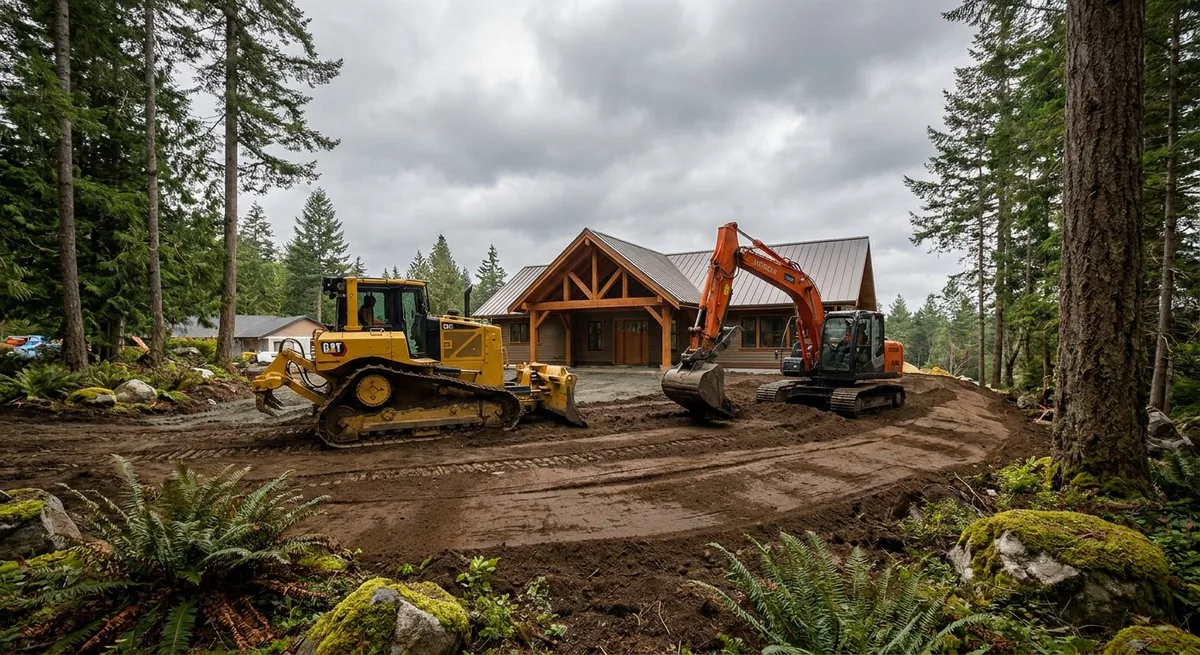
Our grading services cover rough grading for new construction, final grading ahead of landscaping or driveway installation, and general land levelling for property improvement. Each job is shaped to direct surface water away from structures and toward appropriate drainage points. Performance matters more than appearance when it comes to grading. Grading that looks flat and finished on the surface can still direct water the wrong way if slope and drainage weren't planned into the work — we build that planning into every grading job. The ground you're grading decides how much slope you actually need. Clay sheds water slowly, so the fall has to be deliberate and continuous or water simply sits where you left it. Sandier ground drains well but loses stability once reshaped, which puts the emphasis on compaction. Rock close to the surface limits how much you can cut, which sometimes means building up rather than digging down. We assess how water currently moves across your property, including any existing problem areas, before determining target elevations and slope. Rough grading shapes the overall site, while final grading fine-tunes the surface ahead of seeding, sod, or hardscaping. Throughout, we check grade against reference points to confirm consistent, correct slope. On sloped properties, grading does double duty: managing where water goes and keeping the slope stable once it's disturbed. Reshape a hillside without accounting for how it holds together after the vegetation is gone and you trade one erosion problem for another. We plan slope angles and, where needed, pair grading with retaining wall construction so a reshaped slope stays put long after the equipment leaves. This service fits new construction sites needing rough grading before landscaping, established properties dealing with drainage or erosion problems, and homeowners levelling land for a yard, garden, or outdoor living space. It's also a common step ahead of driveway installation or retaining wall construction. Grading is rarely the final step. It's common groundwork ahead of driveway excavation, retaining wall construction, and drainage installation, and the grade we leave directly affects how those stages perform — a driveway base on poorly graded ground settles unevenly, and a drain without proper slope leading to it won't move water. We grade for what comes next, not just for how the site looks the day we finish. Grading isn't only for new construction. We're equipped for corrective regrading on established yards where water pools against a foundation, ponds in a low spot after rain, or has started cutting into a slope. These jobs start the same way as new work: tracing how water actually moves across the property before deciding what needs to change. Wet ground makes grading harder to execute accurately, since saturated soil doesn't hold a shaped slope as reliably as drier ground. We factor the season into scheduling and technique, and where a project's timeline allows some flexibility, drier months typically produce a cleaner, more consistent result. Grading of any significant scale on Cowichan Valley properties can be subject to local bylaws, particularly on properties near watercourses, steep slopes, or within the Cowichan Valley Regional District's regulated areas. We're familiar with the general requirements from our regional experience and can flag when a project may need permitting, though confirming and obtaining any permit remains the property owner's responsibility. Erosion and sediment control is part of responsible grading, especially while a slope or large area is disturbed and not yet stabilized by vegetation or hardscaping. We use measures such as silt fencing and staged work to limit sediment leaving the site during the grading process. We communicate clearly if grading reveals conditions that change the scope of the job — unexpected rock, wetter soil than anticipated, or a slope that behaves differently than it appeared during the initial assessment — before continuing rather than proceeding on assumptions. We check finished grade against reference elevations before considering a job complete, so the slope performs as intended rather than just appearing level, whether that's on a full building lot or a single reshaped corner of an established yard.
We grade with long-term drainage and performance in mind, helping prevent erosion and water problems before they occur.
Benefits of Professional Grading
Grading planned around drainage, not just surface appearance
Rough and final grading available as separate or combined services
Reduced risk of erosion and water pooling after project completion
Grade checked against reference elevations for consistent slope
Experience with both new construction sites and established properties
Common preparation step ahead of landscaping or driveway work
Attention to existing drainage problem areas during assessment
Land levelling available for yards, gardens, and outdoor spaces
Our Grading Process
Drainage Assessment
We assess how water currently moves across your property and identify any problem areas.
Grading Plan
Target elevations and slope are determined based on your drainage and project needs.
Rough Grading
The overall site is shaped to the planned elevations.
Final Grading
The surface is fine-tuned ahead of landscaping, seeding, or hardscaping.
Grade Verification
Finished grade is checked against reference points to confirm correct slope.
What Customers Say About Our Grading Work
We're just getting started building our review history.
Pacific Cowichan Excavating is building a track record of reliable residential excavation work across the Cowichan Valley — check back soon for reviews from real customers, orget in touchto be one of our first.
Ready to Talk About Your Grading Project?
Reach out for a free, no-obligation quote from Pacific Cowichan Excavating.
Grading FAQs
In many cases, yes. We assess how water is currently moving and regrade the problem area to redirect it, though some situations may also require drainage installation alongside grading.
Rough grading shapes the overall site to general target elevations, typically ahead of construction. Final grading fine-tunes the surface afterward, ahead of landscaping, sod, or driveway work.
Usually, yes. Proper grading beforehand helps ensure driveways and retaining walls are built on a stable, well-drained base.
We check finished grade against reference elevations and slope targets throughout the job, not just by visual inspection.
Get a Free Grading Quote
Send us the details of your grading project and we'll get back to you within one business day — or call or email us directly.
Message sent!
Thanks for reaching out — we'll get back to you within one business day.
Or Reach Us Directly
Call Us(778) 744-8387Monday – Friday, 9:00 AM – 5:00 PMEmail Usinfo@cowichanexcavating.caWe reply within one business dayRelated Services
Drainage Solutions
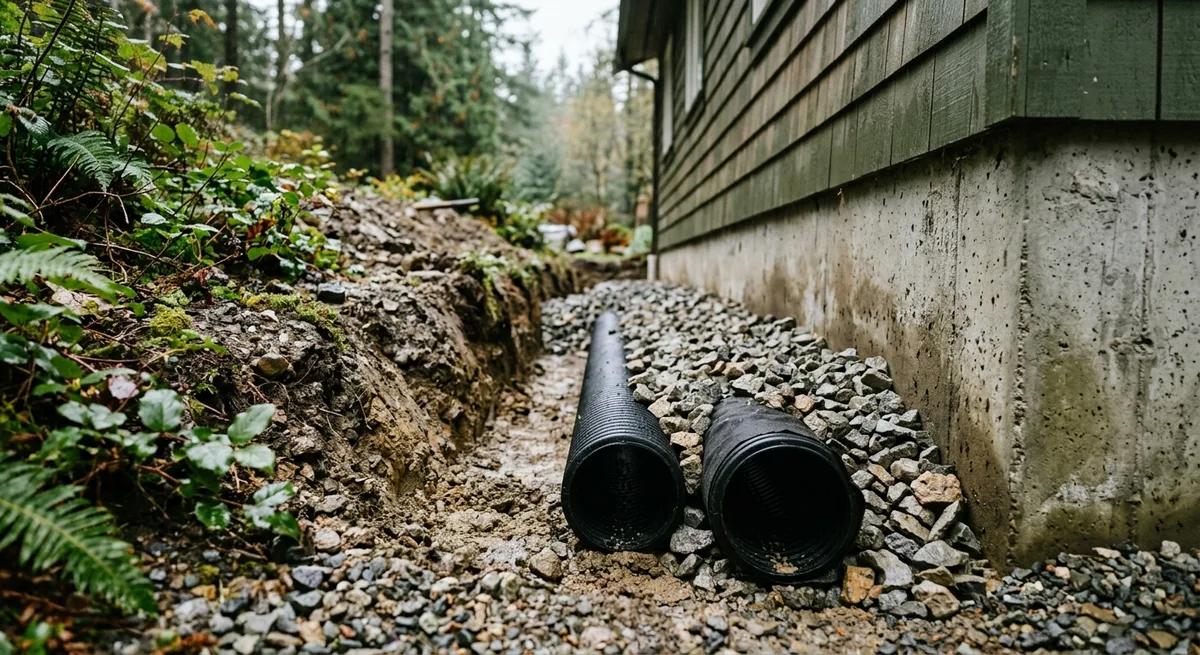
We install perimeter drains, French drains, foundation drainage, and surface drainage systems that protect homes from excess water.
Learn more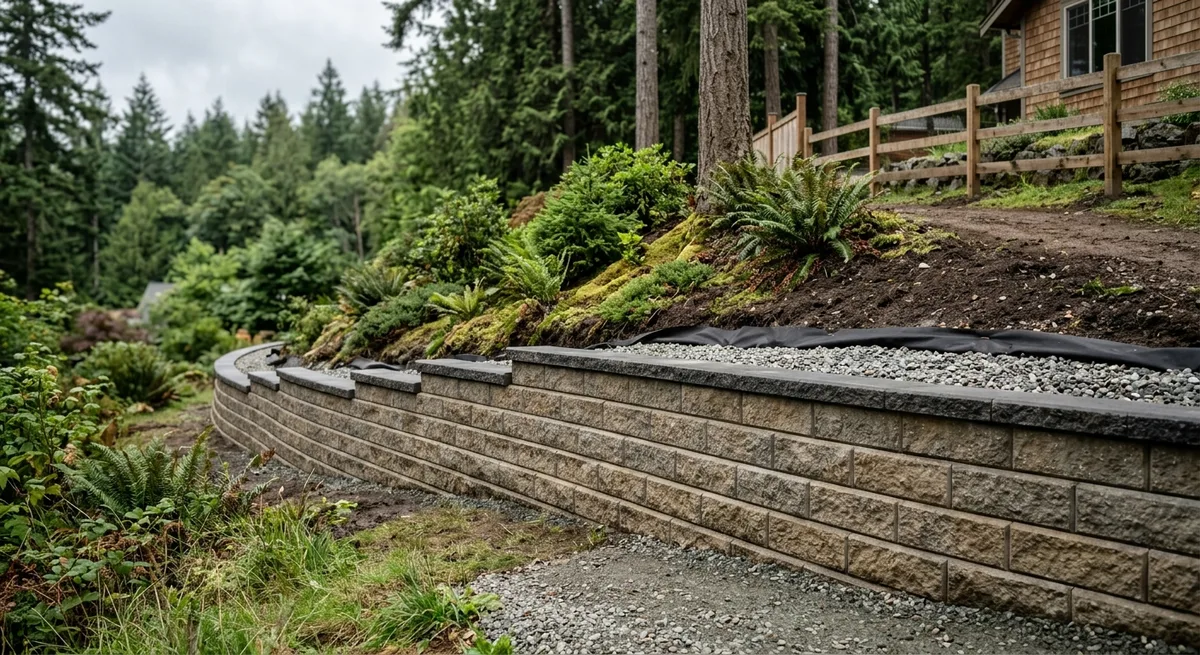
Retaining Walls
Custom retaining wall construction using engineered block, natural rock, or boulders to stabilize slopes and enhance outdoor spaces.
Learn more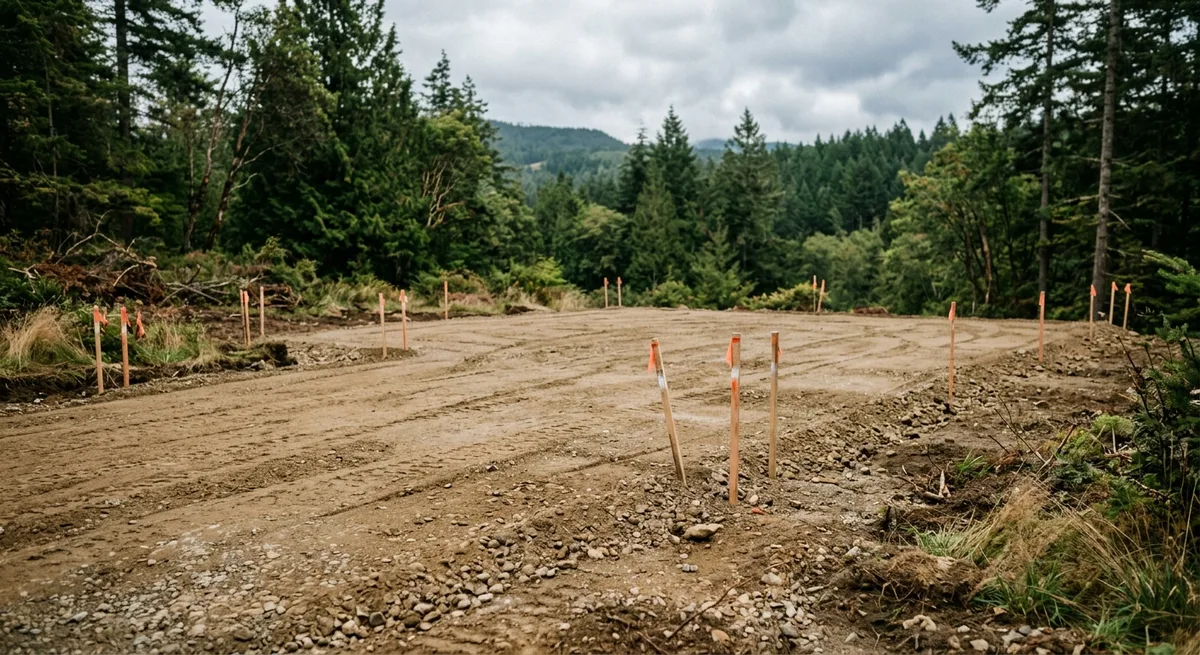
Site Preparation
Complete site preparation services including clearing, excavation, grading, and building pad preparation to ensure your property is ready for construction.
Learn moreLet's Build on Solid Ground
Get in touch today for a free residential excavation quote.